How to find time for books, films, and new experiences
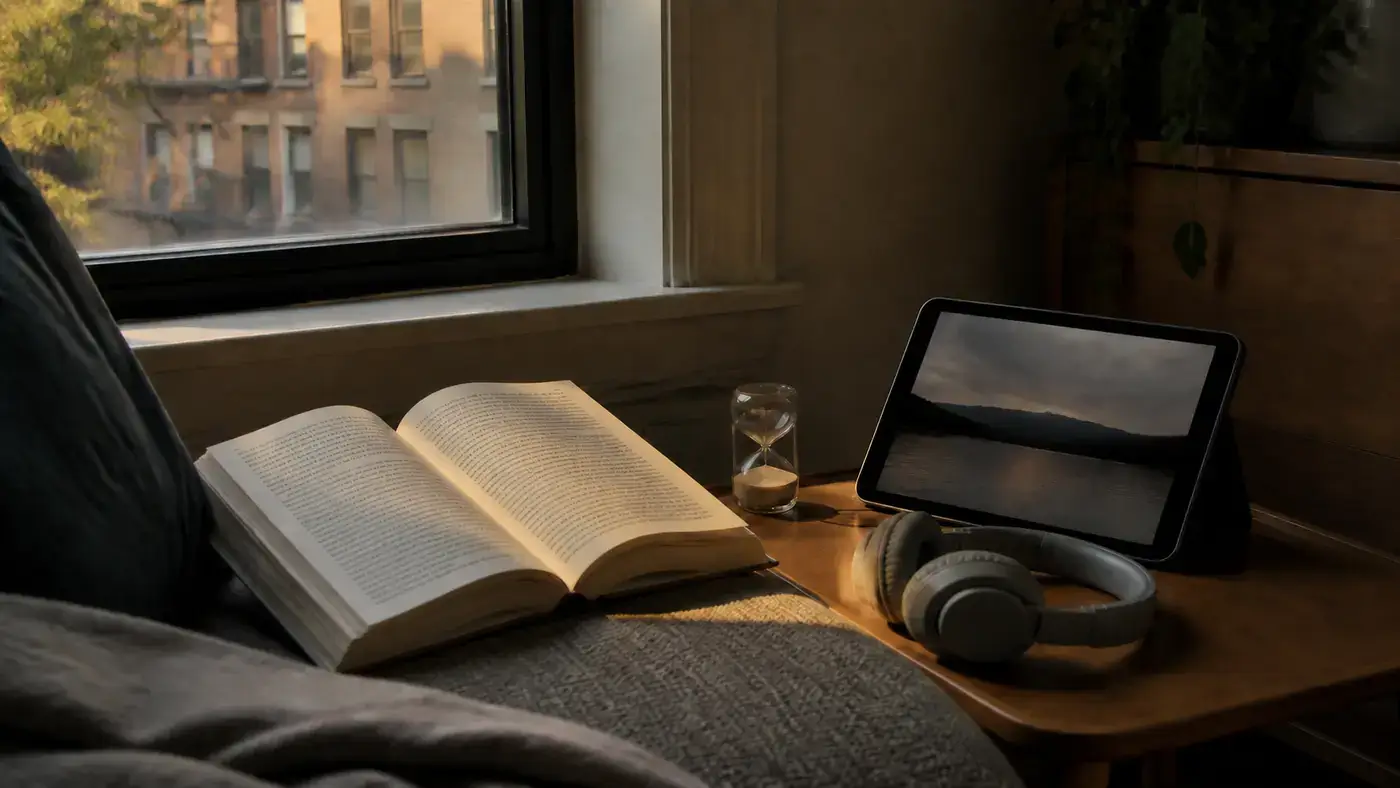
Time for books and films is often scarce not because it is entirely absent, but because it is divided into small, awkward pieces: twenty minutes on a journey, half an hour before sleep, or a pause between tasks. These periods seem too short and go unused, making the sense of having no time stronger than the actual shortage.
Small windows and a waiting list
The most practical change is to stop waiting for a free evening. Regular twenty-minute periods add up to more than a planned evening that is often cancelled. This almost always works for reading. Films are harder, but a series or documentary with short parts fits a real schedule better than a three-hour feature. Much of the available time is spent choosing rather than watching, and a simple list of what you genuinely want to read or see removes that burden. Keep it flexible: add items without obligation and remove them without regret when they have inspired no interest for months.
Permission to stop and a conversation afterwards
The habit of finishing everything often prevents reading altogether. Permission to stop halfway saves more time than speed-reading methods and removes resistance to starting a new book. The same applies to films: if no interest appears after twenty minutes, choosing something else causes no harm. An experience also lasts longer when it can be shared. Watching together or having a brief conversation after reading turns consumption into experience; no club or timetable is required, only someone with whom to discuss what was interesting.
No race for quantity
Counters of books read and films watched motivate at first and then begin to interfere. When the goal is a number, choices shift toward short and simple works while demanding ones are postponed indefinitely. What remains in memory after a month is a better measure than the total at the end of a year. There is equally little value in comparing your pace with someone else’s lists: they describe another person’s habits, not your free time.
Culture needs no specially cleared space. It returns quite easily to an ordinary week when you stop waiting for ideal conditions and begin with the nearest free twenty minutes that almost everyone has. After a month, this approach usually produces more reading and viewing than the previous six months of waiting for the right moment, without having to clear anything from the schedule.